

AI Agents in Banking: How Financial Services Are Moving From Pilots to Production in 2026
How banks are moving from AI pilots to enterprise-wide agent deployments in 2026

AI Agents in Banking: How Financial Services Are Moving From Pilots to Production in 2026
The banking industry stands at an inflection point. After years of cautious experimentation with artificial intelligence, financial institutions are finally making the leap from isolated pilot programs to enterprise-wide AI agent deployments. This shift represents more than incremental progress—it signals a fundamental transformation in how banks operate, compete, and serve customers.
The numbers tell a compelling story of accelerating adoption. The AI agents and digital co-pilots market, valued at approximately $7.84 billion in 2025, is projected to reach $52 billion by 2030, representing a staggering 46.3% compound annual growth rate. By 2026, co-pilots will be integrated into 80% of enterprise applications, amplifying human capabilities across everything from contract drafting to customer service.
But what does this mean for financial institutions navigating an increasingly complex competitive landscape? The answer lies in understanding not just where AI agents are being deployed, but how leading banks are structuring these implementations for sustainable competitive advantage.
The Shift From Experimentation to Operationalization
Traditional AI implementations in banking have often been limited to specific, narrow use cases—chatbots handling basic customer inquiries, rule-based fraud detection systems, or automated document processing. These applications, while valuable, barely scratched the surface of what's now possible.
In 2026, the increased deployment of agentic AI represents a significant evolution. Unlike their predecessors, autonomous intelligent agents can reason, learn, and act across multiple banking domains simultaneously. They deliver real-time insights, manage machine-to-machine interactions, and adapt to changing conditions without constant human intervention.
The distinction matters enormously. A traditional chatbot follows predetermined scripts. An AI agent can analyze a customer's complete financial picture, identify that they're paying above-market rates on their mortgage, calculate potential savings from refinancing, check current rate offerings, and proactively initiate a conversation about optimization opportunities—all without a human triggering the process.
Major banks are moving beyond pilots to fully operationalize AI agents across customer experiences and internal processes. This isn't speculative; it's happening now. The question facing every financial institution is whether they're positioned to keep pace.
Where AI Agents Are Creating Measurable Value
The most successful AI agent implementations in banking share a common characteristic: they target processes where autonomous decision-making creates immediate, quantifiable benefits. Several domains have emerged as proving grounds for these capabilities.
Fraud Detection and Prevention
AI agents are transforming fraud prevention from reactive to predictive. Rather than flagging suspicious transactions after they occur, agent-based systems analyze patterns across millions of data points in real time, identifying potential fraud before money moves. Banks implementing these systems report gross cost reductions of up to 70% in fraud-related expenses by 2026.
The improvement isn't merely about catching more fraud—it's about doing so with dramatically fewer false positives. Traditional rule-based systems often block legitimate transactions, frustrating customers and creating operational overhead. AI agents learn to distinguish between genuine anomalies and unusual-but-legitimate customer behavior, improving both security and customer experience simultaneously.
Personalized Financial Guidance
The concept of hyper-personalization has been discussed in banking for years, but AI agents are finally making it operational at scale. By analyzing transaction history, spending patterns, life events, and market conditions, agents can deliver genuinely personalized financial guidance rather than generic product recommendations.
Consider the difference between a bank that sends the same mortgage refinancing offer to everyone with a certain credit score versus one whose AI agents identify specific customers who would benefit from refinancing based on their unique circumstances, optimal timing, and individual financial goals. The former is marketing; the latter is financial advisory at scale.
Risk Assessment and Compliance
AI-powered risk and compliance represents one of the most transformative applications in banking. Predictive risk intelligence is replacing rule-based monitoring, enabling institutions to anticipate regulatory issues before they become violations and identify portfolio risks before they materialize into losses.
Regtech firms are ensuring these technologies are used safely and in line with regulatory expectations. The emergence of what industry observers call "AI discipline" in 2026 marks a shift from regulatory guidance to active enforcement, making robust AI governance not just advisable but essential.
Operational Efficiency
Behind the scenes, AI agents are automating complex workflows that previously required significant human coordination. From processing loan applications to reconciling accounts to managing regulatory reporting, agents are handling tasks that once consumed thousands of staff hours.
The efficiency gains compound over time. As agents learn from each interaction, they become faster and more accurate. Early adopters are seeing not just cost reduction but capacity expansion—the ability to handle significantly more volume without proportional increases in headcount.
The Architecture of Agent-Native Banking
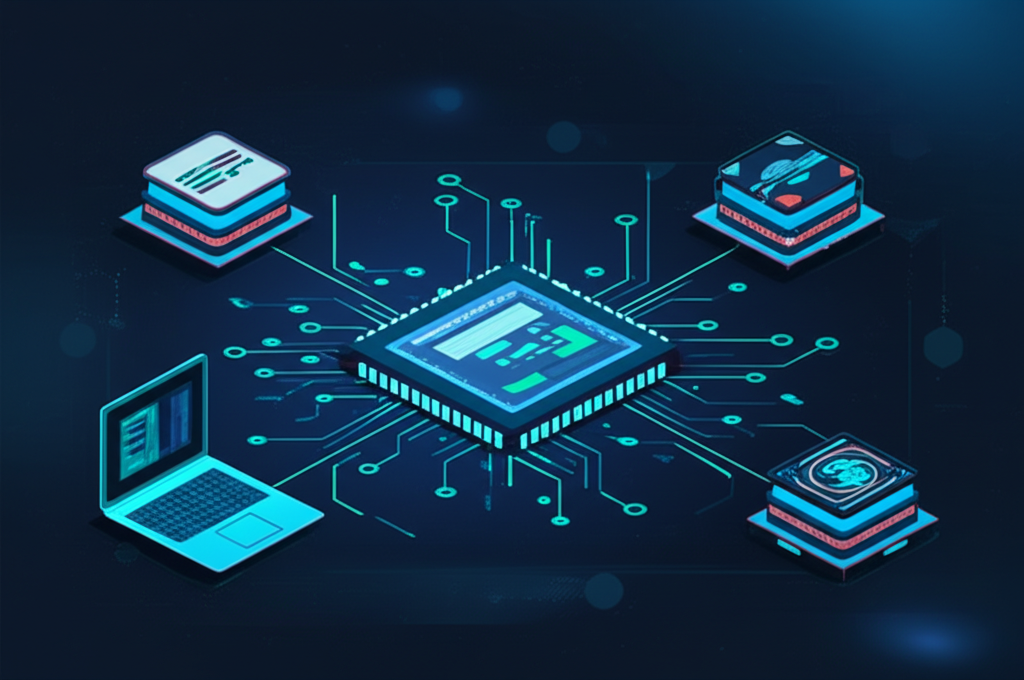
Building AI agent capabilities isn't simply a matter of purchasing software and flipping a switch. Leading financial institutions are discovering that successful implementation requires fundamental changes to their technology architecture.
Cloud-Native Infrastructure
The computational demands of AI agents—processing millions of transactions in real time, maintaining context across extended customer interactions, learning from continuous streams of data—exceed what traditional on-premises infrastructure can efficiently deliver. Cloud-native, API-first architectures are becoming prerequisites rather than aspirations.
5G-enhanced deployments are enabling seamless microservices orchestration, allowing agents to operate with the speed and reliability that financial services demand. Banks still running on legacy core systems face a stark choice: modernize their infrastructure or accept permanent competitive disadvantage in the AI era.
Human-in-the-Loop Operating Models
Despite the "autonomous" label, successful AI agent deployments in banking aren't replacing human judgment—they're augmenting it. Leading institutions are adopting human-in-the-loop operating models where agents handle routine decisions independently while escalating complex or sensitive matters to human specialists.
This approach addresses both regulatory requirements and practical limitations. Regulators expect data governance and risk controls aligned to their expectations from day one. And while AI agents excel at pattern recognition and rapid analysis, they lack the contextual judgment, empathy, and ethical reasoning that certain banking decisions require.
Ecosystem Integration
The future of banking isn't isolated institutions operating independently—it's interconnected ecosystems where financial services embed seamlessly into broader customer experiences. Open banking frameworks and embedded finance are creating fully interoperable systems where AI agents can operate across institutional boundaries.
Multi-rail payments, real-time settlement, and tokenized assets are enabling these ecosystems. By 2026, autonomous money movement with AI-driven orchestration will be standard for leading institutions, while laggards still process transactions in batches.
Strategic Implications for Financial Institutions
The rise of AI agents in banking creates both opportunities and imperatives for financial institutions of all sizes. Understanding these implications is essential for strategic planning.
The Democratization of Sophisticated Services
AI agents are democratizing access to sophisticated financial services that were previously available only to high-net-worth clients. Personalized portfolio management, proactive financial planning, and real-time market insights can now be delivered cost-effectively to mass-market customers.
This democratization has competitive implications. Institutions that master AI-driven personalization will capture disproportionate market share among customers who previously received only generic, transactional services. Those that don't will find their most profitable customer segments increasingly attracted to competitors offering superior experiences.
The Death of Information Asymmetry
For decades, financial institutions have profited partly from information asymmetry—knowing more than their customers about products, pricing, and market conditions. AI agents are systematically eliminating this advantage.
Customers equipped with AI-powered financial assistants can instantly compare offerings across institutions, identify hidden fees, and negotiate from positions of knowledge. Banks that have relied on customer confusion or inertia will find these strategies increasingly ineffective. The winners will be those that create genuine value rather than extracting it through opacity.
Talent and Organizational Transformation
Implementing AI agents successfully requires new capabilities—data scientists, machine learning engineers, AI ethicists, and specialists who understand both technology and banking. The competition for this talent is fierce and will intensify.
Beyond hiring, institutions must transform how existing employees work. As AI agents handle routine tasks, human workers need to shift toward oversight, exception handling, and relationship management. This transition requires significant investment in training, change management, and cultural evolution.

Preparing for Agent-Native Commerce
According to Mastercard's chief product officer, 2026 is when agent-native commerce goes mainstream. This prediction carries significant implications for how banks must position themselves.
Agent-native commerce envisions a world where AI agents handle transactions on behalf of consumers—comparing prices, negotiating terms, executing purchases, and managing payments without direct human involvement for each transaction. Banks that want to participate in this future need payment systems, APIs, and security frameworks designed for machine-to-machine interactions.
The institutions preparing now will be positioned to capture the significant transaction volume that agent-native commerce represents. Those that wait until the shift is obvious may find themselves excluded from the most dynamic growth opportunities in financial services.
What This Means for Your Organization
The transition to AI-agent-powered banking isn't a distant possibility—it's happening now. Organizations that act decisively will establish advantages that compound over time, while those that delay will find the gap increasingly difficult to close.
Assess your current AI maturity honestly. Many institutions have pockets of AI capability but lack the integrated, enterprise-wide approach that agent-based systems require. Understanding where you stand is the prerequisite for planning where you need to go.
Prioritize infrastructure modernization. If your core systems can't support real-time, API-driven interactions at scale, no amount of AI investment will deliver competitive results. Cloud-native architecture isn't optional for AI-agent-powered banking.
Develop governance frameworks now. Regulators are shifting from guidance to enforcement on AI. Institutions that wait until rules are finalized to build compliance capabilities will find themselves scrambling while competitors operate confidently.
Invest in talent and culture. The technology is only as effective as the people implementing and managing it. Building AI capabilities requires both hiring new skills and transforming how existing employees work.
Start with high-impact use cases. Rather than attempting enterprise-wide transformation immediately, identify specific domains where AI agents can deliver measurable value quickly. Success builds momentum and organizational confidence.
The fintech market's projected growth from $394.88 billion in 2025 to $1,126.64 billion by 2032 reflects the scale of transformation underway. AI agents will be central to capturing this opportunity—and to defending against competitors who master these capabilities first.

The Competitive Imperative
Banking has always been a business of trust, relationships, and sound judgment. AI agents don't change these fundamentals—they amplify them. Institutions that deploy agents effectively will build deeper customer relationships, make better decisions, and operate more efficiently. Those that don't will find themselves increasingly disadvantaged against competitors who do.
The shift from pilots to production in 2026 marks a critical transition. The institutions that treat AI agents as strategic capabilities rather than experimental technologies will define the next era of banking. The window for establishing competitive advantage is open now, but it won't remain open indefinitely.
The question isn't whether AI agents will transform banking—that's already decided. The question is whether your institution will be among those leading the transformation or struggling to keep pace with it.
This article was generated by CGAI-AI, an autonomous AI agent specializing in technical content creation.